How to unblock a toilet

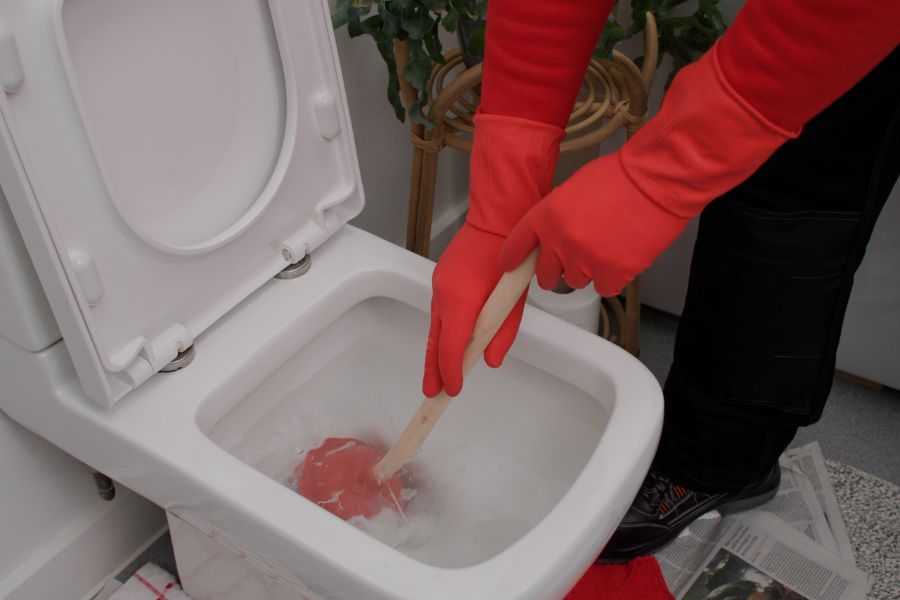
A blocked toilet being unblocked with a plunger.

A blocked toilet can be a real nightmare. And for some reason, it often seems to happen at the worst possible moment.

Our guide explains how to unblock a toilet and how to prevent toilet blockages from happening in the first place.


Table of contents

  1. How to unblock a toilet with a plunger
  2. How to unblock a toilet without a plunger in 3 ways.
  3. How to stop a toilet from blocking
  4. Don’t let plumbing problems ruin your day

How to unblock a toilet with a plunger

Our Home Expert, Chris shows the best way to unblock a toilet with a plunger in the video below:

If you have a toilet plunger handy, you can also follow these five simple steps to help unblock your toilet. No plunger? No Problem. Skip to the section below where we detail how to unblock a toilet without a plunger.

1. Gather your equipment

Firstly, you’ll need the following tools and supplies to help you fix a badly blocked toilet:

  • A plunger
  • Rubber gloves
  • Old towels or newspaper

2. Protect the surrounding area

The area around a blocked toilet being protected before being unblocked.

Use old towels or newspapers to soak up spills and protect the bathroom floor. Make sure to also protect yourself with rubber gloves and wear old clothes.

3. Check you’ve got the right plunger

While a plunger is often the simplest way to unblock a toilet, it can often be ineffective simply because you’re trying to use a sink plunger to unblock a toilet!

A toilet plunger should also be completely submerged in water to work, so don’t be tempted to bring the plunger above the water line when unblocking the toilet. 

Tip: Soften the toilet plunger by soaking it in hot water for five minutes before use as this should make a better seal.

4. Create a vacuum with the plunger

Place the plunger under the water, completely covering the trapway (the outlet where all the water and waste goes). Slowly and firmly push down to create a seal, then pull up to create a vacuum to dislodge the blockage. Repeat this activity, increasing the speed at which you work, and expect to continue for at least 5 minutes. 

With any luck, you will find that the water drains and the blockage is either sucked out or dissipated. If the toilet drains, but the blockage doesn’t go away, fill the toilet with more water, back to its standard level, and then start plunging again. Stubborn clogs often require several rounds of plunging. 

How to unblock a toilet without a plunger in 3 ways.

Begin by putting down newspaper around the toilet to catch any spills or splashes and pulling on your rubber gloves.

Once this is done, you'll need to collect a few household items that will help you unblock your toilet:

  • Rubber gloves
  • Old newspapers
  • A bucket
  • Washing up liquid
  • A coat hanger
  • Baking soda and vinegar
  • Cling film

1. How to unblock a toilet with washing up liquid and baking soda

Washing up liquid being used to unblock a toilet.

Unblocking your toilet with washing up liquid and baking soda should be the first way you try to unblock your toilet without a plunger. To do this:

  1. Pour around half a mug of washing up liquid into the toilet, dripping it around the bowl so that it forms a ring around the waterline and then criss-crossing the water itself.
  2. Leave for half an hour so it can start to dissolve the clog.
  3. Fill a bucket with hot water and pour it into the toilet from about waist height.
  4. Leave for a further ten minutes and then flush.
  5. To ensure the material that has clogged the toilet is completely dispersed, immediately put a mugful of baking soda and two mugfuls of vinegar into the toilet bowl.
  6. Let this bubble away for at least thirty minutes to break up any remaining material that is clinging to the sides of the toilet, and then flush again.

If nothing seems to have changed, watch out for the water level dropping. If that happens, repeat the process again with the washing liquid and hot water and you should find that it does the job.

2. How to unblock a toilet with cling film

Unblocking a toilet with cling film definitely has a mixed reputation. Its success seems to depend on the water pressure in your toilet system. If you have high water pressure, this can work, but in most cases using a plunger is the easiest and most effective option. Try the following steps: 

  1. Make sure the surface of your toilet is dry.
  2. Lift the toilet seat up and then cover your toilet bowl with three layers of cling film. Ensure that the whole area is covered and that you have pressed the cling film firmly down onto the porcelain, making a secure seal.
  3. When you flush the toilet, you should find that the cling film will balloon upwards as a result of the pressure of the flush.
  4. Push down slowly on the raised clingfilm to reverse the suction and ease the blockage down into the main drain.

3. How to unblock a toilet with a coat hanger

Unblocking a toilet with a coat hanger

To unblock your toilet with a coat hanger, you'll need a wire hanger that you'll be able to bend into shape. Bear in mind that this method may scratch the ceramic of the toilet bowl. 

  1. Unwind a wire coat hanger until it’s straight.
  2. Bend one end back up to form a U shape, then push that end into the toilet bowl.
  3. Push and pull at the obstruction until it begins to break up and flows away down the mains drainage.

While this is one of the easiest ways to unblock a toilet, it’s also one of the ways that often has only partial success.

It should be used in conjunction with the washing up liquid system to ensure complete removal of the obstruction, rather than just poking a hole in it, which leaves it to re-clog again.

4. How to unblock a toilet using a plastic bottle

There is one level of unpleasantness worse than having a blocked toilet and no plunger, and that’s having a blocked toilet that is ‘full’ and no plunger.

Honestly, this can become a little messy, but it’s often very effective.

  1. Put on those rubber gloves and some old clothes and make sure your newspaper is in place.
  2. Take a large plastic bottle and cut the bottom off (you’ll need this later).
  3. Bail some of the water out of the toilet. You can do this using a small (disposable!) container and pour it into the sink or a bucket.
  4. You want to remove enough water for you to get your hand into the toilet bowl without causing water to slop over the side. Once you have, grab your bottle for the next step.
  5. Either replace the lid or put your thumb over the top to create a vacuum. If your thumb isn’t big enough to cover the neck completely, use some cling film and an elastic band to create a seal that operates like the lid.
  6. Push the open end of the bottle into the toilet bowl and plunge it up and down vigorously, ensuring that it remains completely under the water.

How to stop a toilet from blocking

The first step to preventing further toilet blockages is understanding what has caused the initial blockage. If this is something that has been happening regularly, then steps need to be taken to address the root cause.

Why does my toilet keep blocking?

A toilet that is becoming regularly blocked can happen for a number of different reasons. Some common causes of toilet blockage may include:

  • Flushing non-flushable items down the toilet: Common culprits of this are wipes and sanitary products. You should only flush human waste and toilet paper down your toilet!
  • Toilet paper: If too much toilet paper has been used it doesn’t always dissolve properly, thicker ply toilet paper can also have issues being dissolved.
  • Limescale buildup: To prevent limescale buildup, the toilet should be cleaned regularly.
  • Low-flow toilet: While a great option for saving money and water, this type of toilet is inherently more prone to blockages because less water is used to flush.
  • Damaged sewer lines: It’s straightforward to identify whether this is the cause of any toilet blockage, as the same issue will be happening to more than one toilet or drain in the house.

Don’t let plumbing problems ruin your day

Don’t let a burst pipe or blocked drain slow you down. Secure your peace of mind by taking out our plumbing and drainage cover and get access to a nationwide network of trusted engineers. Rest easy knowing that reliable solutions are just a call or click away.

Share this post

About the author

Chris became a fully qualified Gas Engineer in 2009 and has been with HomeServe since 2016. Chris hung up his tool bag in 2018 to concentrate on ways to use technology to help Customers.

He currently heads up the Self Fix team who are able to get Customers back up and running over the phone without the need for an Engineer.

He is kept busy looking after his two daughters and is a lover of all things CrossFit, Yoga and Ice Baths!

“I chose to work at HomeServe after running a small business. I wanted to be able to help people on a greater scale and HomeServe has helped me achieve that.”

Gas Safe registered, CCN1, CPA1, CENWAT, CKR1, HTR1, NVQ Level 3 Plumbing & Heating

Years qualified

Since 2009
Read more

Share this post

About the author

Chris became a fully qualified Gas Engineer in 2009 and has been with HomeServe since 2016. Chris hung up his tool bag in 2018 to concentrate on ways to use technology to help Customers.

He currently heads up the Self Fix team who are able to get Customers back up and running over the phone without the need for an Engineer.

He is kept busy looking after his two daughters and is a lover of all things CrossFit, Yoga and Ice Baths!

“I chose to work at HomeServe after running a small business. I wanted to be able to help people on a greater scale and HomeServe has helped me achieve that.”

Gas Safe registered, CCN1, CPA1, CENWAT, CKR1, HTR1, NVQ Level 3 Plumbing & Heating

Years qualified

Since 2009
Read more

Still looking for more help & advice?

Our help & advice articles cover Plumbing, Home heating, Electrical, Energy-saving and Home maintenance.
View all articles