Understanding your boiler
12 common boiler problems and how to fix them
02 Jul 2026 • 7 minutes

Understanding your boiler
02 Jul 2026 • 7 minutes
A boiler leak is usually caused by an issue with an internal component, such as a pressure valve or pump seal. If the leak stems from your pressure relief valve, it is likely that your system’s pressure has become too high. Should the leak be due to a problem with the pump seal, the seal could have worn out.
A leak that has developed around your system’s pipes could be caused by corrosion. There could also be an issue with the way in which your system was installed.
We recommend consulting a Gas Safe registered engineer to help identify and fix this issue.
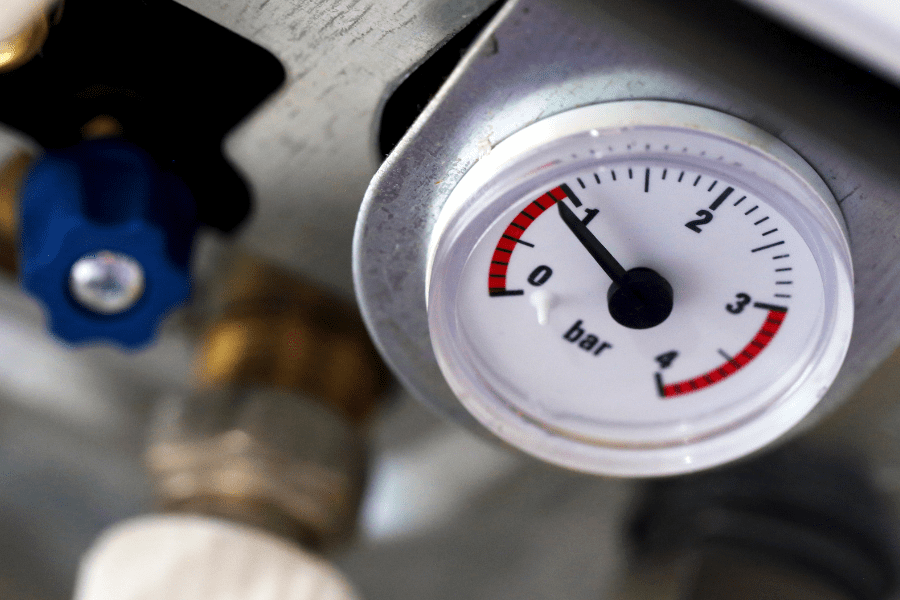
You can usually identify if your boiler’s pressure is too low by taking a look at its built-in pressure gauge. Ideally, your boiler’s pressure should be set at the 1.5 bar. If it is below 1, your boiler will not be able to function properly.
Low boiler pressure is a common boiler problem that can be caused by issues such as a system leak, recently bled radiators or a failed component or seal. To help identify the issue, you could firstly look for visible signs of a leak, but you should not attempt to remove any casings from the boiler.
If you discover a leak, we recommend that you contact a Gas Safe registered engineer. If you do not locate a leak, you could try re-pressurising your boiler if you feel comfortable doing so.
There’s nothing more frustrating than a boiler breakdown that leaves you with no heating or hot water, especially during colder months. This issue can be caused by anything from faulty motorised valves and airlocks, to low pressure or a broken thermostat.
To determine whether this issue is caused by low pressure, you should check your pressure gauge to see if it is below 1. If it is, it may need re-pressurising.
If the intermittent heating and hot water are caused by an issue with your thermostat, check the device’s manufacturer's guide for a possible solution. If no solution can be found, we recommend that you contact your manufacturer for help.
If none of these suggestions help, get in touch with a Gas Safe registered engineer, as issues with internal boiler components will require a professional.
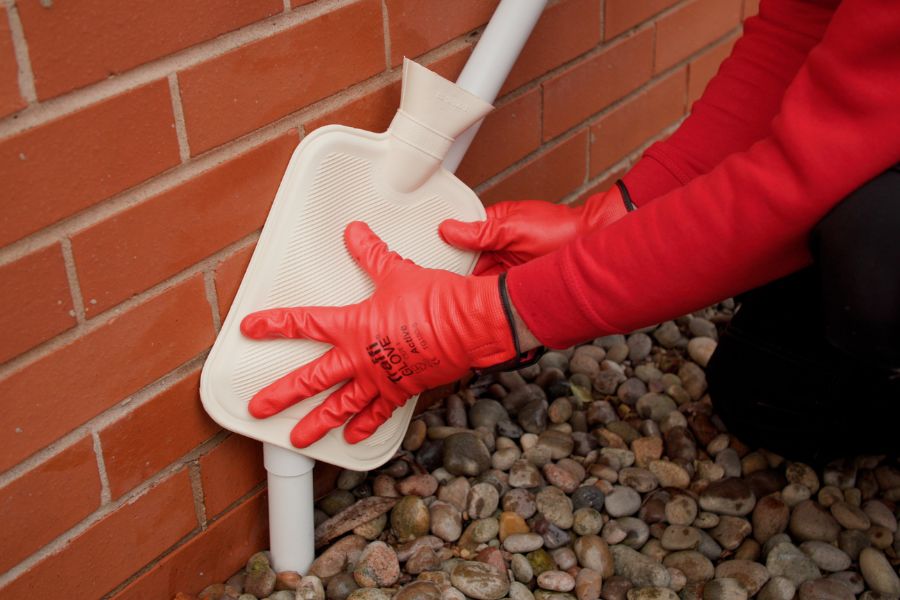
This issue is very common, particularly in the colder seasons. Your system’s condensate pipe is responsible for transporting the condensate from your boiler to your outside drain. During periods of cold weather, the condensate can freeze and cause a blockage to occur.
This is particularly common in homes where the condensate pipe is fitted externally or in an unheated space such as a garage. This issue could cause the condensate to revert into the boiler and lead to the system breaking down.
Luckily, fixing a frozen condensate pipe is quick and easy to do yourself.
Tip alert: Lagging or insulating the pipe can often be a long-term solution for this issue.
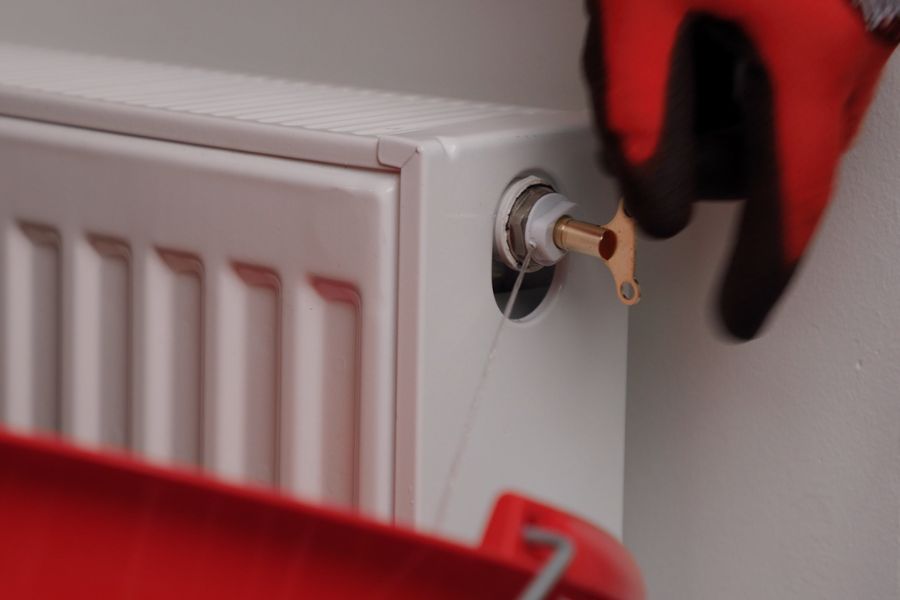
Radiator problems are a common sign that something isn’t working quite right with your heating system. One of the most frequent issues homeowners notice is cold patches on radiators, particularly at the top or in specific areas. This usually happens when air becomes trapped inside the radiator, preventing hot water from circulating properly.
Another common cause is a build-up of sludge, rust, or debris at the bottom of the radiator. Sludge tends to settle over time and can block the flow of hot water, leading to radiators that feel warm at the top but cold at the bottom. If left untreated, sludge can reduce heating efficiency.
Where the cold areas are located can often point to the underlying issue:
In some cases, radiator problems are straightforward to fix. Bleeding the radiator allows trapped air to escape, helping heat circulate evenly again. If bleeding doesn’t resolve the issue, or if multiple radiators are affected, it may point to a deeper problem within the heating system.

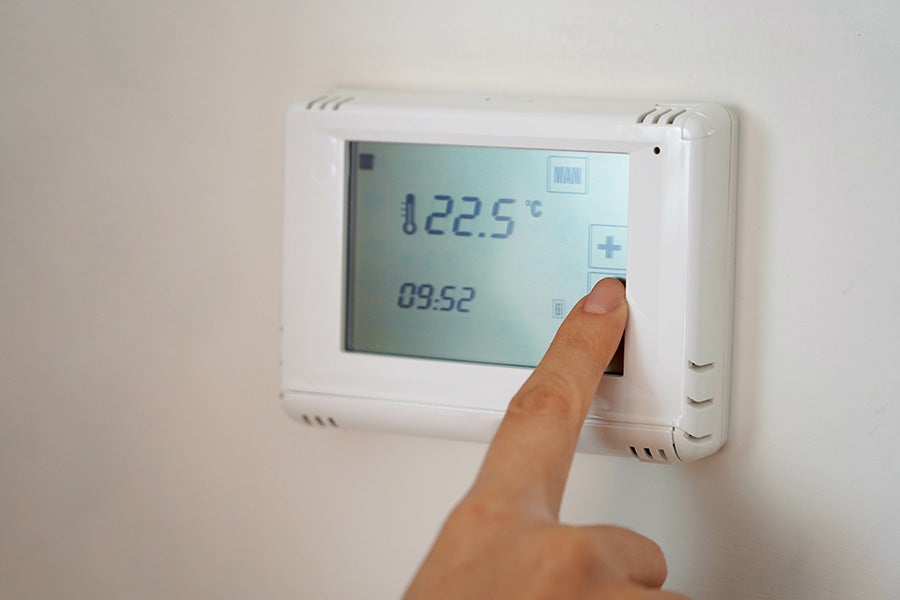
Have the clocks gone backwards or forwards recently? If so, you should ensure the boiler timer or thermostat is set to the new time. If your boiler is completely failing to respond to your thermostat, the controls may be broken or old. However, there are a few checks you should do before concluding that it’s completely kaput:
For a wireless thermostat:
For a wired thermostat:
It’s normal for your boiler to make some noise whilst it’s in operation, especially when it’s firing up. However, if your boiler suddenly begins to make unusual gurgling, banging, or whistling noises, we recommend getting in touch with a Gas Safe registered engineer.
Unusual boiler noise can be caused by air in the system, a faulty pump, low water pressure or even a build-up of limescale known as “kettling.”
Boiler kettling restricts water flow and causes water to overheat, which can reduce efficiency and place additional strain on your boiler. Addressing these issues early can help prevent further damage and keep your heating system running safely and efficiently.
Older boilers may have a permanent pilot light, which needs to stay lit in order to light the larger burner within your boiler. If this light keeps going out, there could be a faulty thermocouple that’s cutting off the gas supply. Alternatively, there could be a build-up of deposits or a draught blowing the light out.
If you feel confident, you may be able to reignite the pilot light yourself by following the instructions in your boiler manual. Before attempting this, make sure the gas shut-off valve is on, and that your gas supply is working correctly. You can confirm this by checking whether other gas appliances in your home are operating as expected.
If the pilot light continues to go out or you’re unsure about carrying out these checks safely, we recommend contacting a Gas Safe registered engineer to diagnose and resolve the problem.
This fault is more common with older boilers, as modern systems are not built with pilot lights and ignite electronically. If the issue with your pilot light persists, it’s best to contact a Gas Safe registered engineer.
If your boiler doesn't turn on, start by checking whether other appliances and power supplies in your home are working. If they are, take a look at your fuse box to see whether any switches have tripped or blown. These simple checks can help rule out an electrical issue. If everything appears to be in order and the boiler still won’t start, it’s best to contact a trained engineer to investigate further.
If your boiler turns on but keeps switching off, the issue may be caused by low water pressure or a blockage within the system. Check the boiler’s pressure gauge: if it’s reading below 1 bar, you may need to re-pressurise the boiler.
If the problem persists, or if you’re not confident to carry out these checks yourself, contact a Gas Safe registered engineer to diagnose and resolve the fault.
If left unaddressed, all of the above issues can eventually lead to a complete boiler breakdown. In which case, you should contact a Gas Safe registered engineer as soon as possible.
Tip alert: If you have a regular/heat-only boiler, you may have access to a backup immersion heater that can provide you with hot water.
Age and inefficiency can also cause boilers to break down beyond repair. If you have an old, inefficient boiler, we recommend investing in a new system to ensure you have the heating and hot water you need. A new modern and energy-efficient boiler could also help you save on your energy bills*!
It’s crucial to remember that you should only perform checks on your boiler that are simple and have minimal risk. Do not attempt to fix the issue yourself, as this could be extremely dangerous.
If you think you can smell gas it’s important that you contact the National Gas Emergency Service on 0800 111 999.
If the gas emergency control valve (located next to your gas meter) is on, but no gas is present, please contact your Gas Emergency Service Provider on 0800 111 999.
If you live in a flat/apartment you may have an additional emergency control valve. This will be found where the gas supply enters the property. Check if it’s in the “On” position.
If the supply has been disconnected for a safety reason, follow the guidance issued on the warning notice left by the Gas Safe registered engineer.
If you have an oil boiler, read the sight level gauge or heating oil tank gauge located adjacent to the oil tank. Alternatively, check the remote oil level sensor plugged into the property's electric supply and linked wirelessly (sonically) to the tank. Either way, check that there’s enough oil in the tank.
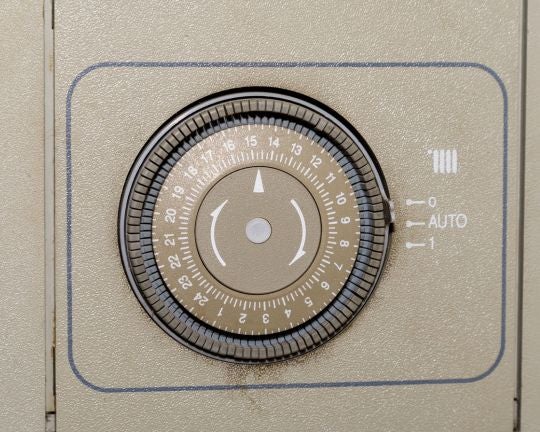
Boiler programmers or timers are usually either digital (electronic) or analogue, and they give you control over when your heating and hot water run. Most programmers offer a few basic options, such as off, timed, or constantly on. Some modern thermostats will have a programmer built in, but in some cases they may be separate.
If your boiler isn’t operating as expected, try switching the programmer to “constantly on”. If the boiler starts working, this is a good sign that the boiler itself is fine and that the issue may lie with the programmer settings or the programmer unit itself.
In this case, check that the time and programme settings are correct. If the problem continues, or the display isn’t working properly, the programmer may need to be repaired or replaced. If you’re unsure how to check this safely, a qualified engineer will be able to diagnose the issue and put it right.
All of our engineers are Gas Safe registered and fully qualified to diagnose and fix your central heating problems. So, whether you know what the problem is or not, you can book an appointment with one of our local experts to diagnose the issue and get your heating back up and running effectively again.
Alternatively, if you’re looking for a new boiler, we’re working together with BOXT, one of the largest boiler installation companies in the UK, to help you find the best boiler for your home.
BOXT makes choosing the perfect new boiler for your home easy with a fixed price quote on your screen in just 90 seconds.
*energysavingtrust.org.uk. Saving calculated when replacing G-rated with A-rated boiler in a semi-detached house.
Our help & advice articles cover Plumbing, Home heating, Electrical, Energy-saving and Home maintenance.